

Zero Hunger
Université Cadi Ayyad (UCA) has implemented various initiatives and contributions aimed at supporting Sustainable Development Goal (SDG) 2 of the United Nations, known as “Zero Hunger.” Through this commitment, the university actively works to combat hunger, strengthen food security, and promote balanced nutrition for both its students and surrounding communities.
This engagement is reflected in the implementation of concrete actions, the development of innovative training programs, as well as territorially grounded initiatives rooted in its local environment. Through these proximity-based actions, UCA contributes to the sustainable development of its territories by promoting locally adapted solutions and involving regional stakeholders in the fight against food insecurity.
Cadi Ayyad University implements various actions to combat hunger and promote food security. These initiatives can be grouped into several main categories :
1. Subsidized University Catering
Université Cadi Ayyad is committed to ensuring that every student has access to balanced and affordable nutrition as part of its contribution to Sustainable Development Goal 2: Zero Hunger.
University residence restaurants provide an essential social service by offering subsidized full meals at the symbolic price of 1.40 MAD. Students can benefit from two meals per day — lunch and dinner — six days a week.
To further strengthen this support system, the university has also established cafeterias and student spaces across its various campuses, providing easy access to meals, beverages, and light snacks at affordable prices.
Through this initiative, Université Cadi Ayyad works to ensure food security and well-being for thousands of students while reducing the impact of financial difficulties on their academic journey and success.
2. Institutionalization of Food Security Actions
The establishment of a dedicated structure, such as UCA's Center for Inclusive Education and Social Responsibility (CEIRS) ‘’Rapport de Responsabilité Sociétale de l'Université Cadi Ayyad’’, is crucial for coherent and sustainable action. Such a center can centralize efforts and ensure that anti-hunger initiatives are integrated into the university's overall mission.
3. Solidarity and Emergency Actions
The Center for Inclusive Education and Social Responsibility (CEIRS) at UCA plays a central role in establishing a food safety net. Among the actions carried out are :
3.1. Emergency Food Drops Aid Al Haouz Earthquake Victims
Emergency food drops : Following the Al Haouz earthquake, UCA quickly distributed non-perishable goods, cereals, and food baskets to over 500 affected families, in coordination with the Moroccan Red Crescent.
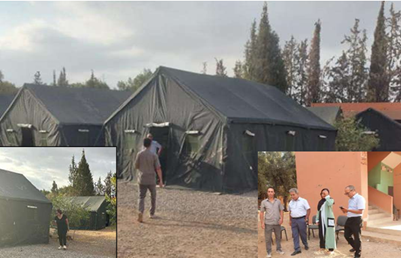
"Emergency Food Drops Aid Al Haouz Earthquake Victims"
3.2. "Iftar Taleb" immediately tells the audience what the initiative is called
Ramadan solidarity (Iftar Taleb): Each year, the CEIRS of Université Cadi Ayyad regularly organizes the distribution of hot meals (iftars) and food baskets during the holy month of Ramadan, thereby embodying the values of solidarity and mutual support within the university community. These distributions are carefully adapted to support students living in other regional cities, taking into account the logistical and financial difficulties they may encounter.
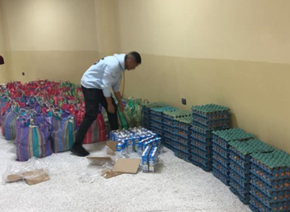
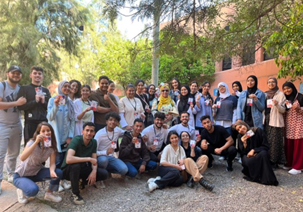
“Preparation of 'Ramadan Baskets' at ENSA-Marrakech”
3.3. Territorial Anchoring for Zero Hunger
UCA demonstrates the effectiveness of direct engagement with local communities, especially farmers, and collaboration with key partners. This approach allows for a response to the specific needs of the field and amplifies the impact of actions.
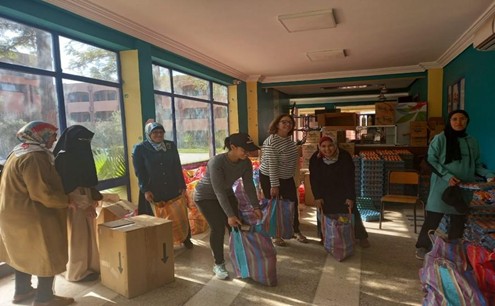
"Distribution of 'Ramadan Baskets' for the benefit of students"
4. Collaboration with Local Farmers and University Laboratories
Université Cadi Ayyad actively contributes to the development of sustainable agriculture by providing concrete solutions to Moroccan farmers facing drought, soil degradation, and the effects of climate change. Through its academic programs, research laboratories, and field-based initiatives, the university promotes knowledge transfer and supports local farming communities.
Training Program:
The Bachelor’s Degree in Science and Technology – Plant Production Engineering (FST Marrakech), supervised by Prof. Aïssam Salama, trains young agronomists capable of working directly with farmers in the field by promoting sustainable, innovative, and locally adapted agricultural practices.
Skills and Key Areas of Training
Students acquire expertise in several essential areas:
- Climate-smart crops capable of withstanding drought periods
- Soil biology techniques for restoring degraded land
- Water-efficient irrigation systems reducing water consumption by 30% to 50
- Biological pest control methods for safer and healthier food production
Field Activities and Farmer Support
As part of a practical and community-oriented learning approach, several initiatives are organized each semester:
- Field days for farmers
- Agricultural demonstration plots
- Free training and awareness workshops
These activities help many small farms transition toward more resilient, sustainable, and profitable production systems.
Impact and Career Opportunities
Graduates of this program are prepared to become:
- Researchers in agriculture and environmental sciences
- Agricultural project managers
- Agronomy advisors and consultants
- Entrepreneurs capable of modernizing family farming operations
Societal Impact
This program contributes to the development of sustainable agriculture by strengthening food security, supporting local farmers, preserving natural resources, and improving the resilience of rural communities to climate change. Through knowledge transfer and field-based initiatives, Université Cadi Ayyad actively contributes to rural development and promotes a more sustainable and responsible agricultural system.
5. Sustainable Agriculture Training
Université Cadi Ayyad offers a wide range of academic programs that contribute to addressing food security and sustainable development challenges, in line with Sustainable Development Goal 2: Zero Hunger. These programs reflect the university’s commitment to equipping students with the knowledge and skills needed to support agricultural and agri-food systems.
In general, the university provides several academic pathways related to food, agriculture, and biotechnology. These programs include:
- Food and Cosmetic Products Engineering
- Food Industry and Safety
- Food Engineering
- Agri-food Quality Management
- Food Product Engineering
- Plant Biotechnology
- Agrosciences
- Biotechnology and Environment
Together, these programs form a comprehensive educational framework aimed at improving food production, food safety, and the sustainability of agricultural systems.
More specifically, Université Cadi Ayyad also offers targeted programs that directly address agricultural production and agri-food systems. Notable examples include:
- Professional Bachelor’s Degree in Agro-Food Engineering
- Bachelor’s Degree in Plant Production Engineering
These specialized programs illustrate how the university translates academic knowledge into practical solutions that support sustainable agriculture and food security.
6. Training Future Food Experts
Université Cadi Ayyad addresses the root causes of hunger and food waste through specialized training programs. The Professional Bachelor’s Degree in Agro-Food Engineering (ESTK), offered at the Higher School of Technology of Kelaa des Sraghna, aims to reduce post-harvest losses which can reach up to 30% of local harvests a major cause of food insecurity for families. Agrofood engineering - UCA.
Skills Developed
Students acquire essential skills in:
- modern food processing to produce long-shelf-life products from cereals and olives.
- food safety regulations and quality assurance according to international standards.
- preservation techniques that reduce post-harvest losses by 20 to 40%.
Objectives of the Program
Graduates work as consultants for small agricultural farms in order to:
- increase agricultural productivity.
- reduce food waste.
- strengthen the sustainability of food systems.
- improve access to more stable and sustainable food supplies.
Societal Impact
This program has a direct and lasting impact on society. It contributes to:
- reducing hunger and food insecurity
- adding value to local agricultural production
- decreasing food losses across the supply chain
- strengthening the rural economy and creating local jobs
- stabilizing food supply chains
- improving the living conditions of small farmers and rural communities
As a result, more than fifty local cooperatives have already benefited from these initiatives, highlighting the key role of Université Cadi Ayyad in building a more sustainable, equitable, and resilient agri-food system.
7. Laboratories engaged in topics of food security, sustainable agriculture, nutrition
In the context of food security, the promotion of sustainable agricultural practices, and the improvement of nutritional outcomes, Université Cadi Ayyad plays a key role through its research laboratories. These scientific structures actively contribute to developing innovative solutions to current agricultural and food-related challenges by conducting research tailored to both regional needs and global issues. They help strengthen knowledge production, scientific innovation, and support sustainable development policies, particularly in relation to Sustainable Development Goal 2.
| Laboratory Name | Relevant Themes | Justification |
| Laboratory of Childhood, Health, and Sustainable Development | Nutrition, Sustainable Agriculture, Food Security | The term "Health" is directly linked to nutrition, and "Sustainable Development" encompasses sustainable agriculture and food security. Publications show research related to health, which can be linked to nutrition. |
| Interdisciplinary Laboratory for Research in Bioresources, Environment, and Materials | Sustainable Agriculture, Food Security | "Bioresources" and "Environment" are pillars of sustainable agriculture. Natural resource management is essential for food security. |
| Water Sciences, Microbial Biotechnologies, and Natural Resource Sustainability | Sustainable Agriculture, Food Security | "Water Sciences," "Microbial Biotechnologies," and "Natural Resource Sustainability" are fundamental for sustainable agriculture and food security. Explicit themes include "Water, Environmental Sciences, and Climate Resilience." |
| Laboratory for Research in Sustainable Development and Health | Nutrition, Sustainable Agriculture, Food Security | "Sustainable Development" and "Health" are key indicators for these themes. |
| Laboratory of Pharmacology, Neurobiology, Anthropobiology, and Environment | Nutrition, Sustainable Agriculture, Food Security | "Anthropobiology" and "Environment" can have links to human nutrition and sustainable agricultural practices. Publications show research related to health, which can be linked to nutrition. |
| Laboratory of Applied Sciences for Sustainable Development | Sustainable Agriculture, Food Security | "Sustainable Development" is a central theme that includes sustainable agriculture and food security. |
| Laboratory of Innovation, Quantitative Economics Research, and Sustainable Development | Food Security, Sustainable Agriculture | "Sustainable Development" is directly relevant, and "Quantitative Economic Research" can analyze the economic aspects of food security and sustainable agriculture. |
SUBSIDIZED UNIVERSITY CATERING
The university provides affordable catering services to ensure that students have access to nutritious and balanced meals throughout their academic journey.
See More
INSTITUTIONALIZATION OF FOOD SECURITY ACTIONS
Food security initiatives are integrated into university policies and programs to promote long-term sustainability and resilience.
See More
SOLIDARITY AND EMERGENCY ACTIONS
The university supports vulnerable communities through solidarity initiatives and emergency response programs during times of crisis.
See More
COLLABORATION WITH LOCAL FARMERS AND UNIVERSITY LABORATORIES
Partnerships with local farmers and research laboratories encourage innovation, sustainable production, and knowledge exchange.
See More
SUSTAINABLE AGRICULTURE TRAINING
Specialized training programs equip students and professionals with skills in sustainable agriculture and environmental stewardship.
See More
TRAINING FUTURE FOOD EXPERTS
Academic programs prepare the next generation of food experts to address global challenges related to nutrition, food systems, and sustainability.
See More